Racing Against the Socialization Window
As soon as my puppy Astra hit 12 weeks and had her second set of vaccines, I effectively had one solid week (ish) left to see the greatest benefit from early socialization. With the most important part of the window closing at 13 weeks, and those second shots, I opened up Astra’s world to bigger adventures and we hit the ground running.
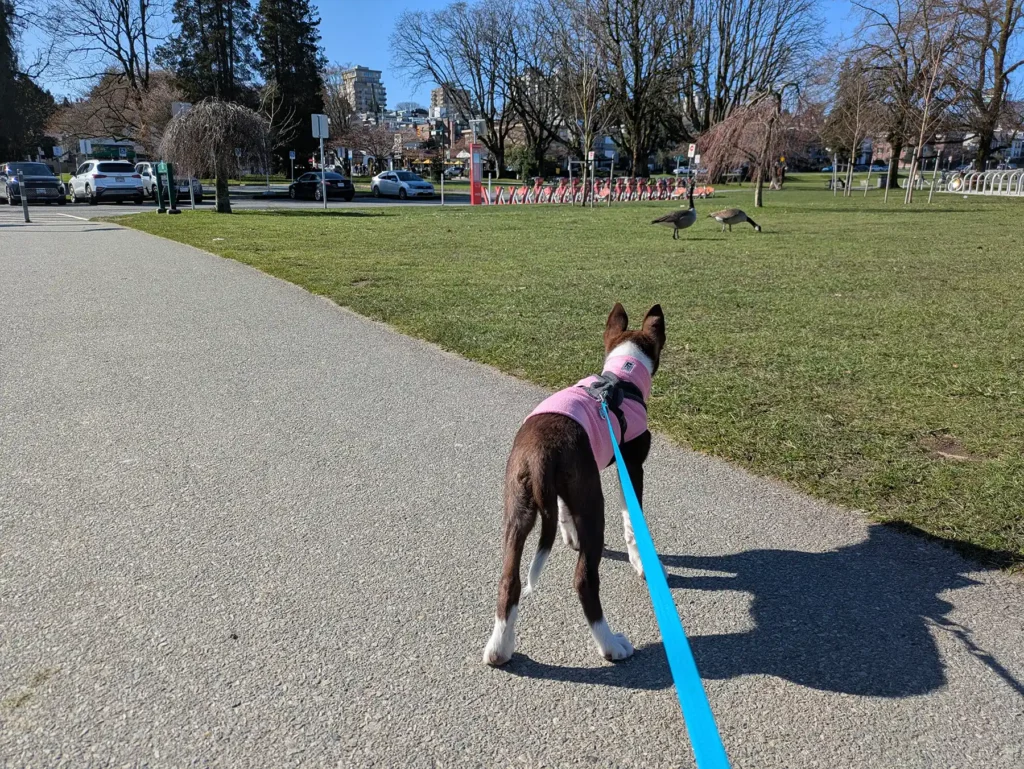
Instead of riding in a backpack through the local farmers market, Astra walked around the market. She went to her first agility trial, played at Kits Beach, visited a variety of different stores, was handled by friends, chilled on a 4th Avenue bench outside a coffee shop, attended Puppy Kindergarten classes (where she was quite naughty), visited a few parks and even had a swimming lesson! My goal was to fill her day with lots of adventures so she would go to sleep tired.
Building Positive Experiences During Critical Development
I was careful to create positive experiences as best I could. Other than a tub of bully sticks tipping over in a pet store, the world according to puppy Astra was a peach! She rocked each outing I set her on and I kept things short, followed by a sleep to set the experience to memory. This is what socialization should look like – little pictures of the big wide world, in bite sized pieces.
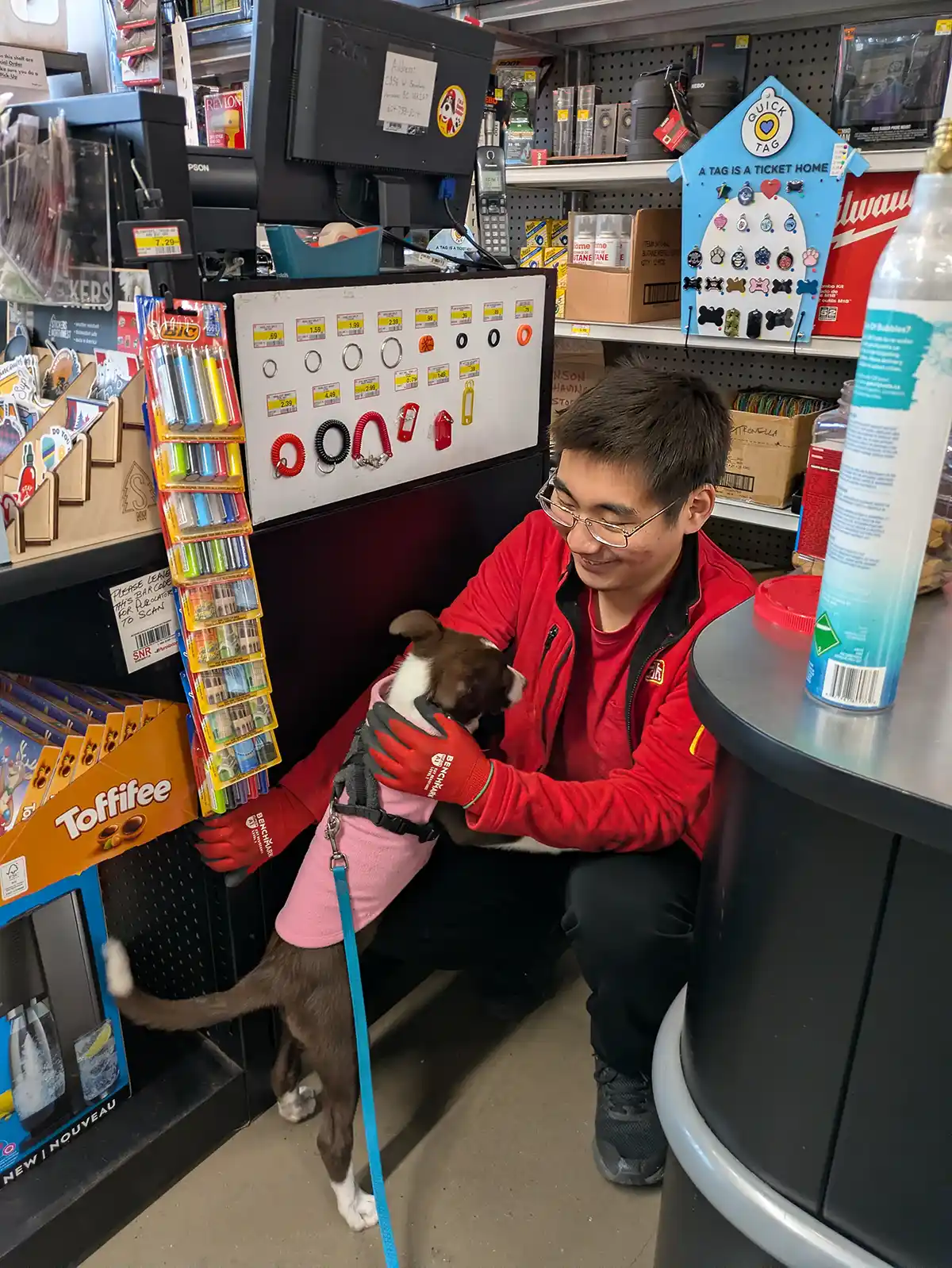
Each outing also gave me information about what I needed to work on: what she found most distracting (being a border collie….joggers joggers joggers), what skills would be important for her to learn (getting comfortable with the vet looking at her teeth), and what things she really loved (and could possibly be used as a reinforcer down the road).
Intentional Early Exposure Shapes Brain Development
Because Astra is my seventh dog, I now have a bit more experience and am more intentional in these early months with her. The importance of all this early exposure to new things cannot be overstated. The trip to Granville Island on a quiet Monday morning, the puppy kindergarten class, chasing waves down at the beach and the trip through Home Hardware, have all shaped puppy Astra’s brain architecture.
Because neuroplasticity is so high, a puppy’s brain acts like a sponge. Those social experiences during daily adventures create millions of neural connections and synapses. They all contribute to creating what “normal” looks like for Astra in all its complexity. The people, the noises, the variety of dogs, the ground surfaces, and the fast-moving objects are all part of what I want Astra to eventually respond to with a “meh.” I love Susan Garrett’s description of what we want to achieve: we want our adult dog to see the world around them as white noise.

How Socialization Creates Stress Resilience in Adult Dogs
As a puppy’s neural pathways strengthen toward a broad range of experiences (which become familiar with exposure), the unused connections are pruned from the brain. This plays a huge role in how puppies like Astra will tolerate stress and exhibit fear responses in the future. In a nutshell, a highly socialized puppy will bounce back better from a stressful event as an adult dog. A poorly socialized puppy simply won’t. As Dr Ian Dunbar puts it: a poorly socialized puppy will not reach its full potential; it will simply cope.
Moving Forward: Beyond the Critical Window
With the socialization window now behind us, that is not to say we are finished with new experiences and adventures. This past weekend Astra took a ferry with my other dogs to the Sunshine Coast to chill at an outdoor agility trial. She met so many new faces and new dogs, got to hear a loudspeaker, dogs barking, and people cheering. Because of all the things her breeders did with her before she came to me and because of all the things I continued on with after she arrived, the trip was effortless. There will be so many firsts for Astra this year. I am confident she will handle the little stresses that newness creates with ease.

Preparing for the Adolescent Stage
Soon we will tackle the stage of development known as adolescence, which is just around the corner. I hope all the good socialization Astra has had will help us both navigate this often tough period, which is peppered with fear periods and reactivity. My hope is that she will have some resiliency to stress from her early socialization, and I will heavily draw upon the foundations I have already established.
Stay tuned for more things Astra in posts to come!