Years ago, when I was a fledgling dog trainer, I came across the work of Brenda Aloff—and more specifically, her remarkable book Get Connected With Your Dog.
Aloff guided much of my early understanding of the different “brains” of our dogs—the hind brain and the front brain—and the connection, or disconnection, we experience with our dogs based on the environment we share.
Of the many powerful things Aloff said, one idea has stayed with me most:
Human leaders to our canine counterparts control two very important resources: food and locations.
How Food Supports Dog Training and Leadership
Aloff explained that controlling access to food is part of using positive reinforcement correctly. Food is a tool for conveying information through training.
How and when we feed our dog—if we are thoughtful—is extremely powerful. Food can be used to teach and guide, such as achieving a reliable recall so that our dog can eventually be trusted off leash.
Food can also enrich our dog’s life through search games, puzzles and other enrichment activities that provide much-needed mental stimulation.
It conveys leadership when we control access to it thoughtfully. Our dog looks to us when hungry and associates having their needs met with our daily care and interactions.
A good example is Dr. Sophia Yin’s Learn to Earn leadership programme, which can be purchased as an e-book. Examples of her steps can also be found easily online with a simple Google search.
Why Free Feeding Can Reduce Motivation
By leaving food out all day, we tear up one of the most important leadership cards in our deck. The floor is now in charge of our dog’s most valued resource, and their need to engage with us is diminished because they can come and go to their dish whenever they please.
Food left out also loses its “illusion of scarcity”, which can be important for motivating a learner to acquire it. It loses some of its magic.
Few billionaires’ children are highly motivated to go out and hustle for a job, let’s face it.
What “Feet” Mean in Dog Training
When Aloff refers to locations, she is referring to feet: controlling the movement of our dog.
This could be as simple as teaching our dog to stay on their mat while the family eats dinner. It could mean teaching connected loose-leash walking down a busy street, recalling them away from a squirrel, or teaching calm manners at the front door when guests arrive.
It could involve working on a relaxation protocol, such as The Art of Chilling: The Practical Relaxation Protocol, or doing daily Sit On The Dog practice.
Calm Feet, Calm Mind
There is an old expression in the horse world:
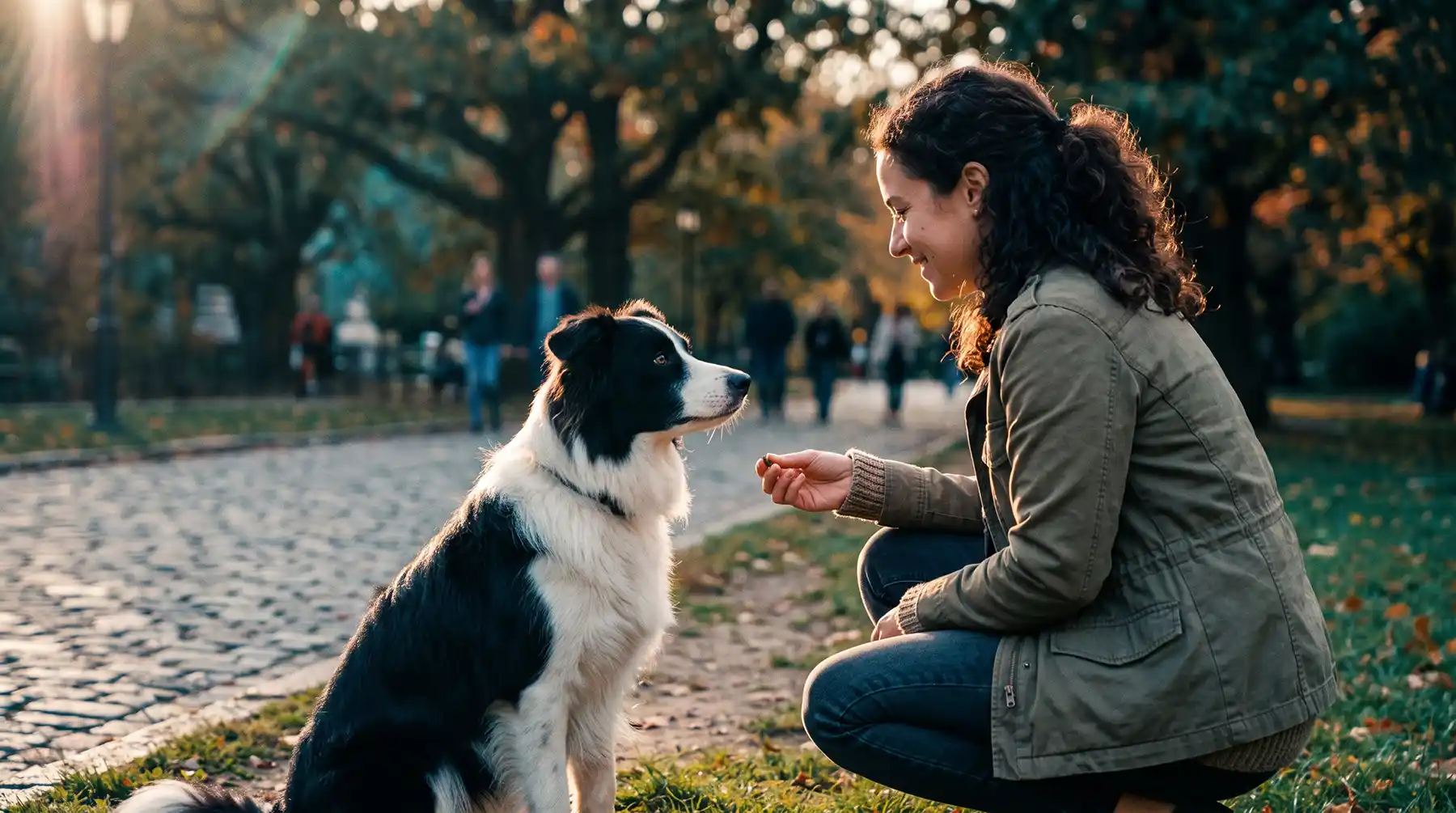
Calm the feet, calm the mind.
When I see a dog who is comfortable and relaxed in their body, they are able to settle without constant direction from their human, and their feet are still.
An anxious dog, by contrast, is often constantly moving and seeking attention from their human.
Dog Leadership Requires Training and Patience
The concept of leadership being tied to food and feet is both simple and complex.
Simply picking up a food dish does not necessarily establish leadership. Dogs who have no history of management, impulse control or a basic stay will not necessarily opt in with the flick of a switch.
Both areas require a training plan, patience and persistence—and often the help of a professional dog trainer. As simple as “food and feet” may sound, the concept is also incredibly nuanced and layered.
Leadership Is Not Dominance-Based Training
I do worry that leadership has received a bad reputation in recent years.
It does not mean choke chains, alpha rolls or the methods associated with Cesar Millan. It does not mean dominance, or a militaristic way of living with our dog in which we must enter doorways first, eat before our dog or restrict access to the furniture.
It does, however, mean that the human provides daily structure and takes responsibility for making important decisions when necessary.
What Effective Dog Leadership Creates
Effective, confident leadership creates a dog who is more willing to opt in when we ask them to do something they would rather not do—such as calling them away from a squirrel in the park or asking them to drop a chicken bone on the pavement.
It creates a dog who looks to us when they feel unsafe. It creates a dog who feels connected and included while navigating an occasionally complex world.
I think that was Brenda Aloff’s intent when she wrote the book.